
Understanding Fabric Weights and What They Mean For Your Windows
When choosing curtains or blinds, most people focus on colour and pattern first. But one of the most important decisions happens long before you settle on a shade - and that’s fabric weight. Here at Gilroy Interiors, we’re often asked why weight matters so much, so we’ve put together this guide to help you understand what’s really going on behind the scenes of your window dressings.
What Does "Fabric Weight" Actually Mean?
Fabric weight refers to how heavy or dense a material is, usually measured in grams per square metre (GSM). It’s not the same as thickness, though the two are often related. A fabric can be thick but lightweight or thin but dense - weight depends on the fibres used, the weave and any backing or lining involved.

Why Weight Makes a Real Difference
- Drape and movement - heavier fabrics fall in soft, generous folds and hold their shape beautifully, while lighter fabrics move more freely and can look delicate or floaty
- Light control - heavier weaves generally block more light, making them ideal for bedrooms, while sheer, lightweight fabrics filter light gently
- Insulation - heavier curtains, especially when interlined, provide better thermal insulation, helping to keep rooms warmer in winter and cooler in summer
- Sound dampening - denser fabrics absorb more ambient noise, which can be a real benefit in busy households or rooms near a road
- Durability - Heavier fabrics tend to withstand daily use, sunlight exposure and frequent handling better than lightweight alternatives
Matching Weight to Purpose
Different rooms and different goals call for different weights:
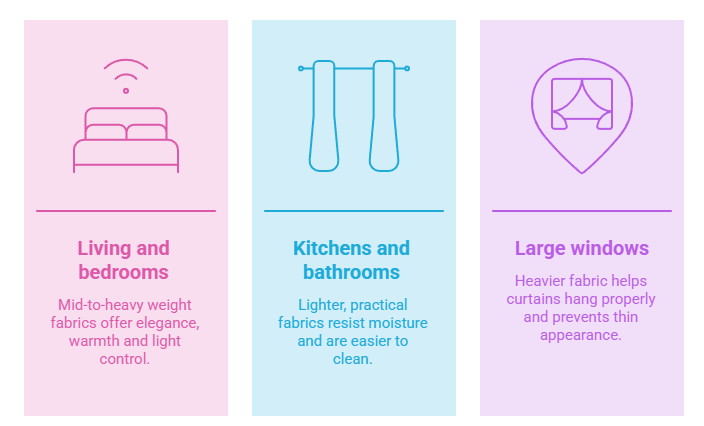
- Living rooms and bedrooms often benefit from mid-to-heavy weight fabrics, especially when they’re paired with a lining, as they offer a good balance of elegance, warmth and light control
- Kitchens and bathrooms usually suit lighter, more practical fabrics that resist moisture and are easier to clean, without feeling heavy in smaller spaces
- Larger windows or bay windows often look best with a heavier fabric, as the extra weight helps the curtains to hang properly and prevents them from looking thin against a big expanse of glass
The Role of Lining and Interlining
It’s worth remembering that the fabric itself isn’t the whole story. Adding a lining, or interlining, can transform the weight and performance of even a relatively light fabric, improving drape, insulation and light-blocking without changing its appearance from the front. This is often the secret to getting a luxurious look without needing an especially heavy fabric to begin with.
Choosing the right fabric weight isn’t just about aesthetics, it directly impacts comfort, energy efficiency and how well your window dressing will stand the test of time. That’s why we take the time to understand your space, your priorities and your style before recommending fabrics that are perfectly suited to your windows.
If you’d like expert advice on choosing the right fabric weight for your home, we’d love to help. Get in touch with a member of our team today.